

Mercury Engine Horsepower Guide: How to Choose the Right Power for Your Boat
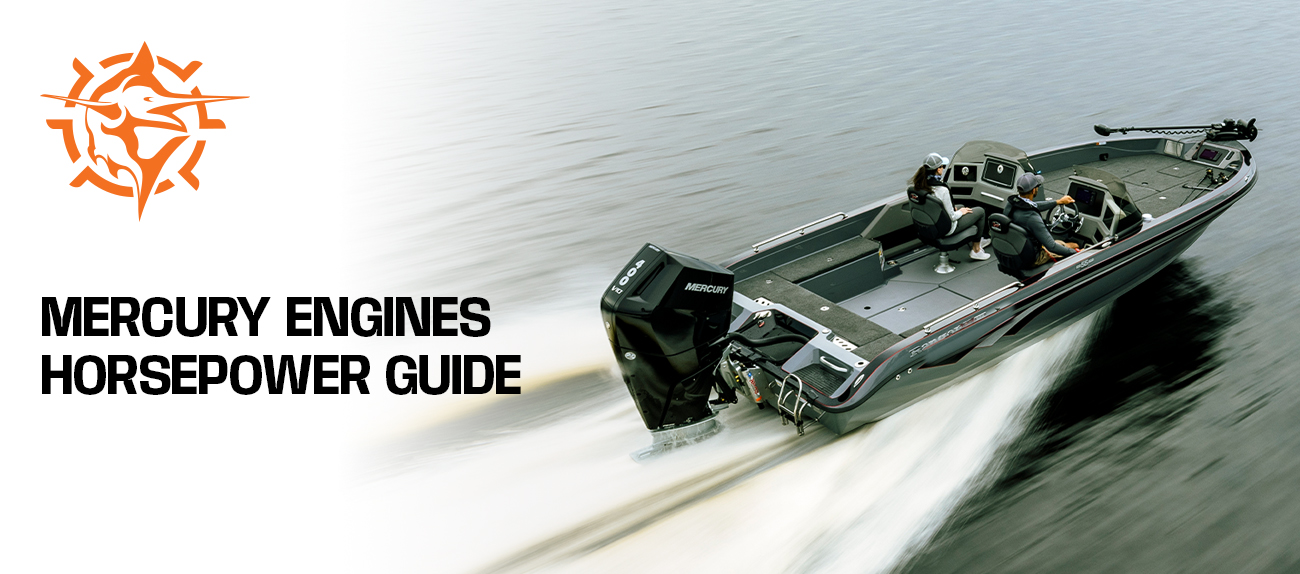
Choosing the right engine for your boat is not simply about going for the highest horsepower available. The right choice depends on how your boat is built, how you plan to use it and the kind of performance you expect on the water.
Boat size, weight, hull design, passenger load and operating conditions can all influence how much power you need. The type of propulsion system also matters, whether you are considering a Mercury outboard, sterndrive or inboard engine.
Mercury offers marine engines across a wide range of horsepower options, giving boat owners the flexibility to choose an engine that suits their vessel rather than simply selecting the largest engine available.
Understanding Marine Engine Horsepower
Horsepower is one of the first specifications people look at when comparing marine engines, but it should never be considered on its own.
Two boats of a similar length can require very different engine setups depending on their weight, hull design, intended use and onboard load.
Before choosing a marine engine, it is important to consider:
- Boat size and overall weight
- Boat manufacturer’s recommended horsepower range
- Maximum horsepower rating of the vessel
- Passenger, fuel and equipment load
- Hull design
- Typical cruising speed
- Desired acceleration and top-end performance
- Fishing, recreational, commercial or watersports use
- Typical sea and weather conditions
- Engine weight and installation requirements
- Fuel efficiency
- Controls, rigging and propeller requirements
- Maintenance and servicing
A properly matched engine helps the boat perform as it was designed to, while providing a better balance between power, handling and efficiency.
What Horsepower Options Are Available from Mercury?
Mercury Marine offers engines for everything from smaller recreational boats to large offshore and high-performance vessels.
Mercury’s outboard portfolio includes engines ranging from approximately 2.5 hp to 600 hp, depending on the engine family and market. Current product families include FourStroke, Verado, Pro XS and SeaPro engines, each developed for different boating requirements.
Rather than looking at horsepower alone, it helps to understand how the different Mercury engine families fit different applications.
Mercury FourStroke
Mercury FourStroke engines cover a broad range of horsepower options and are suitable for many recreational boating and fishing applications.
Depending on the boat, they can provide a practical balance between performance, smooth operation and everyday usability.
Mercury Verado
For larger vessels and applications that require higher horsepower, Mercury Verado engines offer premium high-horsepower options.
The Verado family includes models such as 250 hp, 300 hp, 350 hp and 400 hp engines, with the 600 hp V12 Verado available for demanding high-horsepower applications.
Mercury Pro XS
Mercury Pro XS engines are designed for boaters who place a greater emphasis on acceleration and performance.
They are commonly considered for performance-oriented recreational boating and fishing applications where responsive power is an important part of the overall setup.
Mercury SeaPro
Mercury SeaPro engines are developed for demanding commercial applications where boats may operate for longer hours and under heavier workloads.
The right SeaPro model will depend on the vessel, operating environment and commercial requirements.
How Much Horsepower Does Your Boat Need?
There is no single horsepower figure based only on the length of a boat.
A 20-foot lightweight recreational boat, for example, may have very different requirements from a heavier 20-foot vessel carrying additional passengers, equipment or fuel.
This is why the boat manufacturer’s horsepower specifications should always be the starting point.
Do not install an engine above the vessel manufacturer’s maximum horsepower rating simply because additional power is available. More horsepower does not automatically mean better overall performance.
Several other factors should be considered.
Boat Size and Weight
The size and weight of the boat have a major influence on engine requirements.
A larger or heavier vessel will generally require more power to reach its intended cruising and performance levels. However, hull design and vessel configuration are equally important, which is why boat length alone should not be used to determine horsepower.
Passenger and Equipment Load
Think about how the boat will actually be used rather than how it performs when empty.
Passengers, fuel, fishing equipment, water, safety gear and other onboard equipment all add weight. A boat that regularly operates with a full load may behave very differently from the same boat carrying only one or two people.
The expected operating load should therefore be considered when choosing an engine.
Intended Use
How you use the boat also affects the type of power you may need.
A boat used for relaxed recreational cruising has different performance requirements from one used for watersports, offshore fishing or demanding commercial operations.
For example, acceleration may be particularly important for certain watersports applications, while commercial operators may place greater emphasis on durability and consistent performance over long operating hours.
Operating Conditions
Local operating conditions should also be part of the decision.
Boats operating offshore or regularly carrying heavier loads can have different propulsion requirements from boats mainly used for short recreational trips in protected waters.
For boat owners in the UAE and wider Gulf region, factors such as offshore use, high temperatures, longer cruising distances and typical vessel loads may also be worth discussing when selecting the appropriate marine engine.
Why Proper Engine Matching Matters
Choosing the right horsepower is about more than achieving a particular top speed.
The engine, hull, propeller, controls and rigging work together as a complete propulsion system. When these components are correctly matched, the boat is better positioned to deliver the performance expected from its design.
A well-matched marine engine can help provide:
- Suitable acceleration
- Comfortable cruising performance
- Predictable handling
- Efficient operation
- Reliable propulsion
- Appropriate power-to-weight balance
Propeller selection is another important part of the setup. The correct propeller depends on the engine, boat, load and intended operating conditions, so it should be considered alongside the engine rather than as an afterthought.
Mercury Outboard Engines
Mercury outboard engines are used across a wide variety of recreational, fishing, commercial and performance boats.
One of the main advantages of an outboard configuration is that the engine and propulsion components are mounted outside the hull, which can simplify access for servicing while freeing up space inside the boat.
Mercury’s range extends from compact FourStroke engines for smaller boats through to high-horsepower Verado engines for larger offshore vessels.
The right Mercury outboard engine depends on:
- The boat manufacturer’s horsepower rating
- Transom specifications
- Vessel weight
- Single or multiple-engine configuration
- Expected passenger and equipment load
- Intended use
- Required performance
- Operating environment
For larger vessels, twin or multiple outboard installations may also be considered where supported by the boat manufacturer.
The goal should always be to achieve the right balance between power, performance, handling and practical operating requirements.
Mercury MerCruiser Sterndrive and Inboard Engines
Outboards are not the only option.
For boats designed around an inboard or sterndrive propulsion system, Mercury offers MerCruiser sterndrive and inboard engines for a range of recreational marine applications.
Current MerCruiser engine options include 6.2L and 8.2L V8 configurations across different horsepower outputs. Mercury documentation, for example, lists 6.2L models in the 300–350 hp range and 8.2L models reaching higher horsepower outputs depending on the configuration.
An inboard or sterndrive solution may be preferred depending on the vessel’s design, available space, weight distribution and intended use.
When selecting a Mercury inboard or MerCruiser engine, it is important to consider the complete installation rather than horsepower alone.
This includes:
- Vessel configuration
- Existing propulsion system
- Engine compartment dimensions
- Cooling and exhaust requirements
- Drive configuration
- Controls and instrumentation
- Expected performance
- Installation requirements
- Service accessibility
For a repower project, compatibility with the existing boat and propulsion system should be carefully assessed before selecting the replacement engine.
FAQ
How do I know what horsepower my boat needs?
Start with the boat manufacturer’s recommended and maximum horsepower ratings. Boat weight, hull design, passenger load, equipment and intended use should then be considered when selecting the appropriate engine within those specifications.
Can I install a higher-horsepower engine on my boat?
You should not exceed the boat manufacturer’s maximum horsepower rating. If you are considering an engine upgrade or repower, the vessel and propulsion setup should be reviewed to confirm compatibility.
What is the difference between Mercury FourStroke and Verado engines?
Mercury FourStroke engines cover a wide range of general recreational boating applications. Verado engines are positioned toward premium, higher-horsepower applications and are often used on larger vessels where higher power and refined performance are required.